Article · FinCrime history
The Partnerships Built to Hide the Debt
Enron used conflicted special-purpose entities and bank-designed “prepays” to keep debt off its books, enrich insiders, and sustain a false picture of strength until Chapter 11 on 2 December 2001 remade corporate oversight.
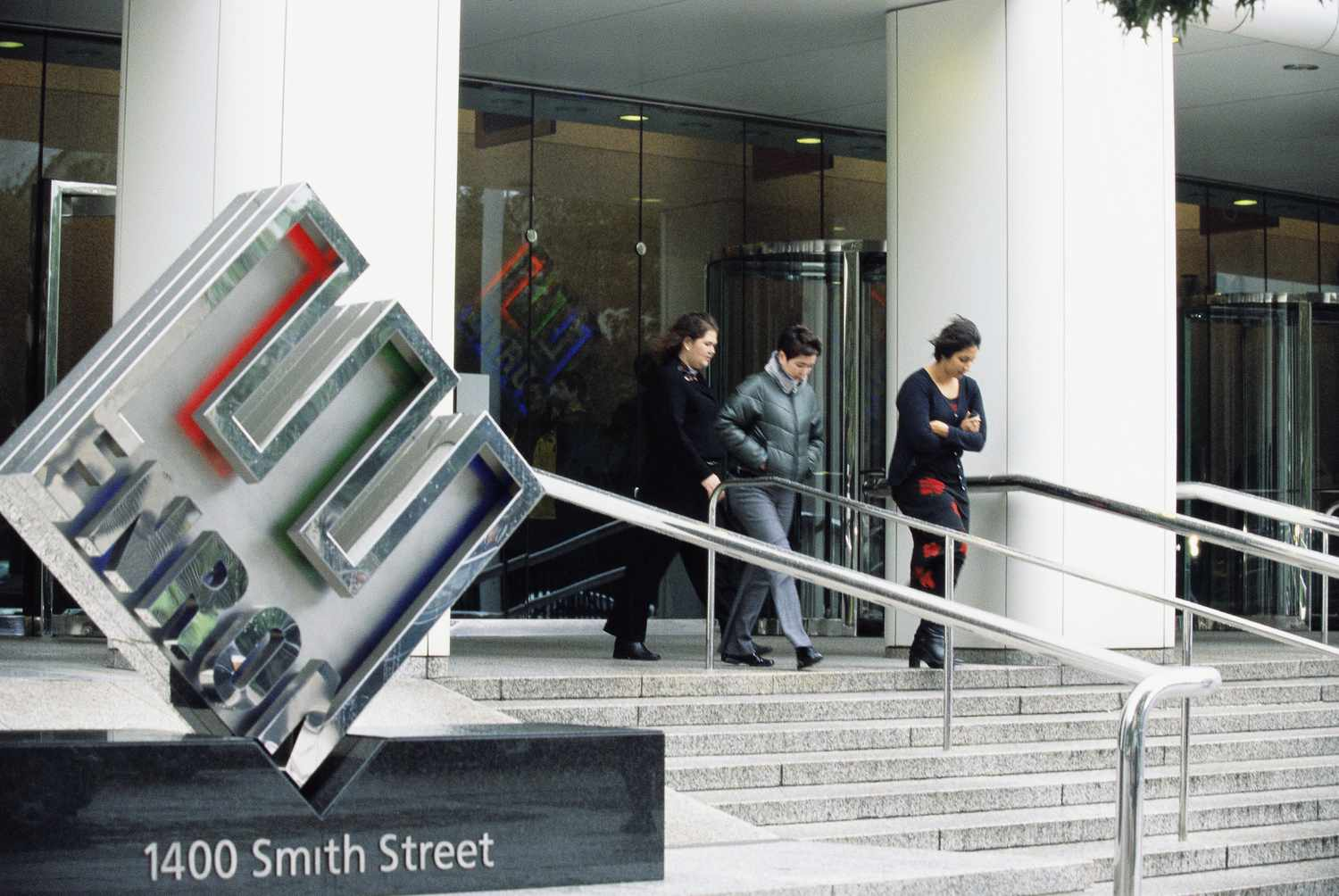
On 2 December 2001, Enron Corporation filed for Chapter 11 bankruptcy protection. The FBI later framed the case as a web of partnerships used by executives to generate false profits and hide true debt. For FinCrime desks, that framing is the right place to start. Enron was not brought down by a Bank Secrecy Act civil penalty. It collapsed because senior managers used opaque special-purpose entities (SPEs), related-party structures, aggressive revenue recognition, and deceptive documentation to conceal the company’s condition from investors, lenders, auditors, and markets.[1][2]
The fraud and the gatekeeper failures around it still map onto investigation practice: beneficial ownership that does not match the story, related parties posing as independent counterparties, debt dressed as equity or sales, side agreements that reverse the economics, cash flows that circle rather than settle risk, and institutions paid to arrange or bless the structure. Those are not, by themselves, proof of money laundering. They are the conditions under which financial-statement fraud and illicit-finance risk both thrive.
Criminal work produced convictions across executive, financial, accounting, and business-unit roles; the FBI says 22 people were convicted for conduct related to the fraud.[1] The first criminal plea in the case included conspiracy to launder money.[3][4] Enron’s collapse, and the audit failures around it, also helped drive the Sarbanes-Oxley Act of 2002 and the creation of the Public Company Accounting Oversight Board (PCAOB).[5][6]
Complexity as a substitute for transparency
By the late 1990s Enron had moved from pipelines and energy delivery into energy trading and increasingly complex structured ventures. Complexity is not misconduct. Derivatives, project finance, and risk-management contracts can be legitimate tools. Enron’s failure was to use complexity in place of transparency.
The Securities and Exchange Commission alleged that executives used SPEs involving chief financial officer Andrew Fastow to manipulate results, inflate the stock price, and file reports that materially overstated revenue and earnings while understating debt and expenses.[2] Mark-to-market accounting for long-term contracts, approved for Enron’s natural gas futures trading in 1992, let the company book estimated present value of future profits when deals were signed. Reported revenue rose from about $13.3 billion in 1996 to about $100.7 billion in 2000 as Enron also reported the full notional value of trades rather than trading spreads alone. Mark-to-market earnings widened the gap between reported profits and cash. SPEs filled that gap, and hid growing debt. By 2001 the company had used hundreds of them.[7]
SPEs are not inherently improper. They become dangerous when economic substance diverges from legal form, when the sponsor retains risk or control, or when decision makers profit from both sides of the deal. In Enron’s case, structures helped keep obligations and losses outside the picture investors were shown, while Fastow’s participation created conflicts that should have triggered heightened scrutiny.
Conflicted entities and insider enrichment
Several named vehicles illustrate the pattern. Chewco raised Enron-guaranteed debt to buy out a California pension fund’s stake in a joint venture and keep related losses off Enron’s books. Whitewing bought about $2 billion in Enron assets using Enron stock as collateral; transfers treated as sales should, on the available record, have been treated as loans. LJM1 and LJM2, run by Fastow, supplied the “outside” equity Enron’s SPEs needed to stay off consolidation, with funding from major banks and equity marketed by Merrill Lynch. The Raptors used Enron’s own stock to hedge Enron investments, meaning the company was effectively hedging with itself; a claimed gain on those contracts made up a large share of 2000 earnings.[7]
Enron’s board granted Fastow an exemption from the company’s code of ethics so he could run the LJM partnerships while serving as CFO.[7] The conflict was not a disclosure footnote. A company officer with influence over transactions, valuations, and disclosures was also positioned to benefit from counterparties whose apparent independence was central to the accounting presentation.
The SPE complex also moved money to insiders. In August 2002, Michael Kopper, a managing director who worked for Fastow, pleaded guilty to conspiracy to commit wire fraud and conspiracy to launder money, and agreed to forfeit about $12 million.[3][4] The SEC alleged that Kopper and others used complex structures, straw men, hidden payments, and secret loans to make entities they controlled look independent of Enron.[4] Kopper admitted paying kickbacks to Fastow from Chewco management fees. In a Southampton partnership transaction described in the Kopper case materials and contemporaneous coverage of the plea, Enron paid $30 million for an asset, only $11 million went to the original owner, and Fastow, Kopper, and others divided the remaining $19 million.[4]
Fastow was indicted on 98 counts including fraud, insider trading, and money laundering. On 14 January 2004 he pleaded guilty to two counts of conspiracy and agreed to cooperate. Linked plea agreements required substantial forfeiture; contemporaneous records put the couple’s forfeiture at about $23.8 million.[7][8] He had told Enron’s board in October 2001 that he earned $30 million from managing the LJM partnerships.[7] On 26 September 2006 he was sentenced to six years, below the ten years in his plea agreement, citing cooperation.[8]
The SEC’s action against Fastow also alleged transactions in which a financial institution’s investment was protected by a prearranged return and timetable, an off-balance-sheet entity controlled by Fastow was used to avoid consolidating debt and to recognize earnings on a troubled Brazilian project, and documents purported to lock in a value retroactively.[9] For investigators, the pattern is familiar: insiders controlling nominally independent vehicles, fees routed to family members, and asset deals priced to leave a spread for the conspirators.
Loans dressed as trades
The Senate Permanent Subcommittee on Investigations (PSI) focused on how major banks contributed to Enron’s use of complex transactions to make the company appear stronger than it was.[10] The core device was the “prepay”: normally a buyer pays in advance for a commodity delivered later. Senator Susan Collins explained that Enron’s prepays transferred no price risk and used no genuinely independent third parties. They were circular transactions designed to disguise what were essentially loans. An offshore entity created by or for the bank paid Enron up front with bank funds, often without oil or gas changing hands, and the bank hedged its exposure, sometimes with Enron itself.[11]
Collins said the J.P. Morgan Chase vehicle Mahonia and the Citigroup vehicle Yosemite allowed Enron to keep $8 billion off its balance sheet, describing a “merry-go-round of refinancings at the expense of investors.”[11] PSI’s chief investigator testified that after reviewing more than a million pages of documents, staff found that some financial institutions actively aided Enron’s accounting deceptions in return for fees and other business, and that Enron could not have deceived on that scale without them.[12] Senator Carl Levin, in the same PSI record, cited an internal J.P. Morgan Chase email stating that “Enron loves these transactions because it can hide debt from its equity analysts,” and said both banks had marketed the prepay structures to other companies.[10]
On 28 July 2003 the SEC settled with both banks. J.P. Morgan Chase agreed to pay $135 million and Citigroup $120 million, of which $101 million related to Enron and $19 million to similar conduct at Dynegy. The SEC found the structures had no business purpose beyond disguising loans, and that both banks knew Enron used them to reassure investors, analysts, and rating agencies about cash flow and debt. Citigroup’s findings also covered Project Nahanni, which used Treasury bills bought with borrowed money to create operating cash flow, and Project Bacchus, a $200 million financing presented as a sale. The SEC’s complaint alleged that J.P. Morgan Chase treated the prepays as unsecured loans and based participation on Enron’s credit. Enforcement director Stephen Cutler warned that “you can’t turn a blind eye to the consequences of your actions.” Federal and state banking supervisors entered written agreements requiring both banks to strengthen risk management and internal controls. Settlement money was directed to victims through Sarbanes-Oxley’s Fair Fund provision.[13]
Civil recoveries in the shareholder class action led by the University of California ran far higher: Canadian Imperial Bank of Commerce paid $2.4 billion, J.P. Morgan Chase $2.2 billion, and Citigroup $2 billion, with other banks, Andersen, and outside directors adding more. Combined recovery exceeded $7 billion and was described as the largest in securities class-action history. Settlements did not include admissions of wrongdoing.[14]
Individual banker prosecutions were mixed. Merrill Lynch executives were convicted in 2004 over an alleged Nigerian barge sale near an earnings deadline with an alleged buyback guarantee; the Fifth Circuit later threw out the convictions, and the Justice Department declined to retry.[7] Three British bankers from Greenwich NatWest pleaded guilty in 2007 to one count of wire fraud over a Fastow entity and were each sentenced to 37 months.[7]
The OCC’s principle before the PSI remains useful: banks cannot realistically be responsible for how every customer accounts for a transaction, but bank management should consider the transaction’s impact on the bank and decline to participate in deals that do not meet the bank’s standards of integrity.[15]
Gatekeepers who did not stop it
Arthur Andersen, Enron’s outside auditor, was central to the fallout. In 2000 Andersen earned $25 million in audit fees and $27 million in consulting fees from Enron. After the SEC inquiry became public, the firm shredded documents and deleted large volumes of electronic files. Lead partner David Duncan pleaded guilty to obstruction in April 2002; the firm was convicted of obstruction that June and surrendered its licenses in August 2002. The U.S. Supreme Court unanimously reversed the conviction in 2005 because jury instructions failed to convey the required elements of “corrupt persuasion.” The reversal matters legally. It does not change the practical outcome: Andersen had already lost its client base and ceased operating as a major audit firm.[7][16]
The Justice Department described the executive conduct as an elaborate, protracted, deliberate effort to mislead analysts and investors about Enron’s actual financial condition.[17] On paper, Enron’s board looked strong; Chief Executive magazine named it one of the five best boards in 2000. The audit committee still lacked the depth to challenge the SPEs, and the Senate subcommittee found the board had been informed of and approved Whitewing, LJM, and Raptor structures.[7]
Warnings arrived before the end. Jeffrey Skilling resigned as CEO on 14 August 2001. The next day, vice president Sherron Watkins sent chairman Kenneth Lay a letter warning that the company might “implode in a wave of accounting scandals.” Lay referred the concerns to Enron’s outside law firm, which reported in October that it had found nothing wrong because Andersen had approved each item.[7]
Seven weeks from restatement to bankruptcy
On 16 October 2001 Enron announced restatements for 1997 to 2000 that cut earnings by $613 million and equity by $1.2 billion. On 22 October the SEC opened an inquiry into related-party deals. On 25 October Fastow was removed as CFO after several banks refused to lend while he remained; Enron could no longer roll commercial paper. Dynegy agreed to acquire Enron on 8 November, then walked away after rating agencies cut Enron to junk on 28 November and the stock closed at $0.61. On 2 December Enron filed for bankruptcy. About 4,000 jobs were lost, and roughly 62 percent of the savings plans of Enron’s 15,000 employees were invested in company stock. With about $63.4 billion in assets, it was then the largest U.S. corporate bankruptcy until WorldCom the next year.[1][7]
DOJ stated that the collapse put thousands of employees out of work and cost investors billions.[17]
Prosecutions from the bottom up
The Enron Task Force, working with FBI and IRS Criminal Investigation agents and with SEC assistance, built the case from cooperating insiders upward. Kopper’s cooperation led to Fastow; Fastow’s cooperation reached the top.[18]
A federal jury convicted Lay and Skilling in May 2006 on multiple fraud, conspiracy, and related counts; the district judge also found Lay guilty of bank fraud and false statements in a separate bench trial.[17] Skilling was convicted of conspiracy, securities fraud, insider trading, and false statements to auditors. After appeals, including a 2010 Supreme Court ruling that narrowed the honest-services theory, he was resentenced in 2013 to 168 months and ordered to forfeit about $42 million for victims.[18] Lay died on 5 July 2006 before sentencing; in October 2006 the judge vacated his conviction and dismissed the indictment under the abatement doctrine, which also undercut a large forfeiture claim.[7] Richard Causey, the chief accounting officer, pleaded guilty and was sentenced to seven years.[7]
Conviction tallies differ by how overturned and abated cases are counted. The FBI’s figure of 22 convictions remains the agency’s public summary.[1] Separate reporting counted 16 guilty pleas and five trial convictions, including Merrill defendants whose convictions were later overturned.[7] The durable point for investigators is breadth: large financial fraud rarely lives in one department.
Oversight remade after the fall
Congress responded with the Sarbanes-Oxley Act, signed 30 July 2002. The SEC describes the law as sweeping corporate-disclosure and financial-reporting reform enacted after declining confidence caused by executive, auditor, and market-participant misconduct.[6] The statute created the PCAOB, restricted auditors from providing most non-audit services to audit clients, required executive certification of financial reports, provided for forfeiture of certain bonuses after restatements, expanded disclosure of relationships with unconsolidated entities, and increased penalties for destroying or fabricating records in federal investigations.[5][6][7] Under the Act, the PCAOB registers public-accounting firms, sets auditing and independence standards, inspects and investigates, and enforces compliance for public-company audits.[6] The New York Stock Exchange adopted rules requiring majority-independent boards and financially literate audit committees.[7]
For banks and other gatekeepers, the lasting point is that financial reporting and financial-crime risk cannot be sealed into separate programs. An opaque structure may create securities, credit, fraud, tax, and AML exposure at the same time.
What investigators still pull from the file
Enron’s record does not support a claim that every SPE was a laundering vehicle. It does show that the same opacity and weak challenge that enable statement fraud can conceal illicit-finance risk. Desk indicators that remain current:
- Entities without credible purpose. Newly created vehicles with thin independent capitalization, no operating capability, and high volumes of complex trades deserve a verified business purpose, not a label.
- Related parties posing as independent counterparties. Map beneficial owners, control rights, management overlaps, guarantees, side letters, and compensation on both sides. Code-of-ethics waivers for senior officers are a hard stop for enhanced review.
- Debt disguised as equity, sales, or prepays. Ask whether the counterparty takes genuine price or credit risk, or whether repurchase, liquidity support, put rights, or a guaranteed return reverse the stated deal. Circular offshore “third parties” created by the financing bank deserve particular scrutiny.
- Cash flow inconsistent with stated economics. Reconcile payments, collateral, revenue, and debt service to commercial purpose. Look for round-trip flows, round-dollar transfers, and timing that exists only to meet a reporting date. Earnings that chronically outrun operating cash flow are a signal, not a curiosity.
- Documentation and valuation that move after the fact. Retrospective agreements, late valuations, unusual manual adjustments, and missing work papers demand forensic review of metadata and contemporaneous drafts.
- Gatekeeper capture. Auditor consulting fees that exceed audit fees, boards that approve related-party structures they cannot explain, and risk or compliance staff discouraged from documenting dissent are enterprise-wide fraud indicators.
An Enron-style investigation starts with a relationship map, not a single ledger line. Map sponsors, SPEs, managers, financial institutions, auditors, investors, related contracts, guarantees, and accounts. Build a timeline that aligns deal formation, board approvals, revenue recognition, public disclosures, cash movement, and later changes in terms. Then test the customer narrative against contemporaneous emails, draft agreements, payment records, and document metadata. Preserve early: once an inquiry, whistleblower allegation, subpoena, or credible fraud indicator appears, hold communications, valuation models, side letters, approval memoranda, and source-document changes.
The SEC’s 2003 message to the banks still applies: a firm that knows a client’s structured transaction exists only to achieve an accounting or disclosure result shares responsibility for the deception.[13] Client due diligence must cover the purpose of the transaction as well as the identity of the client. Fee income from an important relationship is exactly when independent challenge matters most.
Enron’s demise was corporate fraud, not an adjudicated AML-program failure. The characteristics of that fraud (opaque entities, undisclosed conflicts, prearranged exits, false documentation, weak independent challenge, and manipulation of public narratives) are exactly the conditions FinCrime investigators are trained to recognize. Where an institution cannot identify the real parties, explain the economic purpose, verify cash flows and risk transfer, or obtain independent evidence that management’s story is true, it should stop, investigate, preserve evidence, and escalate.
Sources
- Federal Bureau of Investigation, “Enron” (history case summary; investigation and convictions overview).
- U.S. Securities and Exchange Commission, *Complaint: Jeffrey K. Skilling, Richard A. Causey* (2004).
- U.S. Department of Justice, Deputy Attorney General Larry D. Thompson, Kopper plea press conference statement (21 August 2002).
- U.S. Securities and Exchange Commission, *SEC v. Michael J. Kopper*, Litigation Release No. 17692 (21 August 2002).
- Public Company Accounting Oversight Board, “The Public Responsibility of a CPA” (background on PCAOB creation).
- U.S. Securities and Exchange Commission, “Disclosure Required by Sections 406 and 407 of the Sarbanes-Oxley Act of 2002.”
- Wikipedia, “Enron scandal” (secondary overview used for SPE names, collapse timeline, and board/auditor detail; prefer primary records above where they overlap).
- U.S. Department of Justice, “Former Enron Chief Financial Officer Andrew Fastow Sentenced to Six Years in Prison for Conspiracy to Commit Securities and Wire Fraud” (26 September 2006).
- U.S. Securities and Exchange Commission, “SEC Charges Fastow, Former Enron CFO, With Fraud” (2 October 2002).
- U.S. Senate Permanent Subcommittee on Investigations, “The Role of the Financial Institutions in Enron’s Collapse” (July 2002), including Levin opening and follow-up statements.
- Collins, Susan M., Opening statement, PSI Enron financial institutions hearing (23 July 2002).
- Roach, Robert, Testimony, PSI Enron financial institutions hearing (23 July 2002).
- U.S. Securities and Exchange Commission, “SEC Settles Enforcement Proceedings against J.P. Morgan Chase and Citigroup,” Press Release 2003-87 (28 July 2003).
- Citigroup Inc., “Citigroup Agrees to Settle Enron Class Action Litigation for $2.0 Billion,” Form 8-K Exhibit 99.1 (10 June 2005); combined class recoveries also summarized in contemporaneous reporting.
- Office of the Comptroller of the Currency, Statement of Douglas Roeder before the Permanent Subcommittee on Investigations (11 December 2002).
- U.S. Supreme Court, *Arthur Andersen LLP v. United States*, 544 U.S. 696 (2005).
- U.S. Department of Justice, “Statement by Deputy Attorney General Paul J. McNulty on the Convictions of Former Enron Chief Executive Officers Ken Lay and Jeff Skilling” (25 May 2006).
- U.S. Department of Justice, *United States v. Jeffrey K. Skilling* case page and resentencing materials.